GrN.dk

Main navigation

  • Articles
  • Contact
  • Your Digital Project Manager
  • About Greg Nowak
  • Services
  • Portfolio
  • Container
    • Excel Freelancer
    • Kubuntu - tips and tricks
    • Linux Apache MySQL and PHP
    • News
    • Image Gallery
User account menu
  • Log in

Breadcrumb

  1. Home

Articles

Scraping Tools and Browser Automation for Modern Teams

Most scraping and browser automation projects do not fail because a selector was wrong once. They fail because the team chose a full browser when a simple request would have done the job, or because nobody planned for login expiry, consent banners, downloads, and UI changes. If you are responsible for reporting, QA, partner portals, or repetitive back-office tasks, the real question is not which library is fashionable. It is which approach gives you the lowest maintenance cost while still surviving production conditions.

WordPress Security Releases Still Need an Ops Runbook for Business Sites

When WordPress 6.9.2 shipped on March 10, 2026, the official message was simple and correct: this was a security release, and site owners should update immediately. For a business site, though, “update immediately” should never mean “click first and figure it out later.” It should mean you already know who owns the change, how the site is backed up, how the database step will be handled, and what gets checked before the maintenance window is closed.

Protocols: h2, h2c, and HTTP/1.1 Tips for Real-World Stacks

HTTP/3 gets the headlines, but most teams still spend their time deciding how traffic should move between browser, CDN, load balancer, reverse proxy, and origin. That is where h2, h2c, and HTTP/1.1 still matter. If you run a business website or client platform, the goal is not to chase protocol fashion. It is to choose defaults that are fast, compatible, easy to debug, and cheap to maintain.

WordPress 7.1's Unicode Email Push Makes Legacy Validation and CRM Hand-Offs a Paid Cleanup Job

On May 22, 2026, WordPress Core published its proposal to extend Unicode support in email addresses. By June 10, 2026, that had moved into active WordPress 7.1 testing: the developer roundup said the first 7.1 testing calls had already started, and the Make WordPress Core front page published a specific call for testing on Unicode email addresses. At that point, this stops being an abstract standards discussion. It becomes a practical maintenance question for any business running WordPress in production.

Cloudflare Tunnel observability is better in 2026, making undocumented tunnel sprawl harder to ignore

Cloudflare Tunnel still solves a real problem: you can publish internal or customer-facing services without exposing the origin directly to the public internet. A lightweight cloudflared process makes outbound-only connections to Cloudflare, which is why the model is attractive from a security perspective. The operational downside is that Tunnel also makes it very easy to accumulate one-off fixes: a connector for staging, a hostname added during a launch, a production dependency that “just works” but nobody owns.

Check if a Constant Is Defined in PHP: Practical Code Snippet

When a WordPress site behaves one way on staging and another way on production, the root cause is often not a plugin bug. It is often a constant set somewhere in wp-config.php, a host include, or an environment bootstrap file. For business owners, ops leads, and agency teams, checking constants quickly can save an hour of guesswork and stop unnecessary code changes.

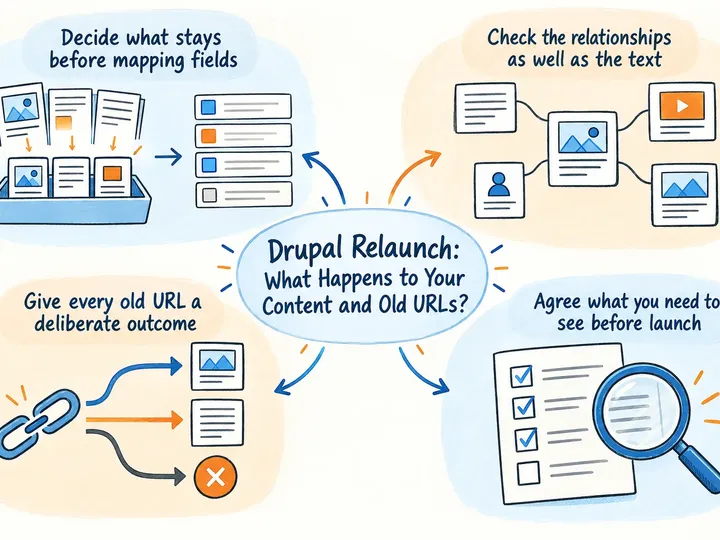
How to Fix Drush Symfony PHP Errors in Drupal

If you are seeing a fatal error around EventDispatcher::dispatch() when running Drush, treat it as a toolchain problem first, not a content problem. The usual failure is simple: the Drush binary being executed was installed in one place, while the Drupal site is loading Symfony components from another. That mismatch is common on inherited servers, shared agency boxes, and developer machines with old global Composer installs. For a business owner or operations lead, the real issue is not the stack trace.

OpenAI Computer-Use Rollouts Turn Browser Tasks Into a Scoped-Credentials Project

Operations teams have wanted software to take care of repetitive browser work for years: supplier portals, admin consoles, claims dashboards, finance back offices. What has changed is not just model quality. OpenAI’s current computer-use guidance lays out practical ways to run browser agents through screenshots, structured UI actions, existing automation harnesses, and code-execution runtimes. That makes narrow pilots realistic. It also raises the cost of getting the rollout wrong.

WordPress 6.8 Password Hashing: Why Legacy Login Bridges Become a Troubleshooting Risk

Most WordPress upgrades are judged by what editors notice in the admin. This one is different. WordPress 6.8 changed how user passwords and several security-sensitive tokens are hashed and verified. For normal sites that use standard WordPress login, that is mostly good news: security is stronger and existing users keep working. The real risk sits in the custom code around WordPress, especially older login bridges, SSO glue code, migration helpers, mobile APIs, and support scripts that inspect stored hashes directly.

Bulk Delete Cloudflare DNS Records Without Browser Console JavaScript

If you searched for a browser-console JavaScript trick to bulk delete Cloudflare DNS records, you are probably not chasing a hack for its own sake. You are cleaning up a live zone after a rushed migration, a bad import, or years of vendor drift. In that situation, speed matters, but control matters more.

How to Flush DNS Cache on Ubuntu Linux

When a domain cutover still points to the old IP, people often jump straight to 'flush DNS and try again.' On Ubuntu, that is sometimes correct, but on a real server or agency laptop it is only one part of the check. As of Ubuntu 26.04 LTS and 24.04 LTS, most systems use systemd-resolved and the standard command is resolvectl. Some estates still run nscd or dnsmasq, and application-level caching, VPN DNS, or /etc/hosts can make a local flush look ineffective.

Bing’s AI Search Push Makes Sitemap and IndexNow Freshness a Real Ops Problem

For years, XML sitemaps and IndexNow sat in the technical SEO bucket. Bing’s recent guidance changes how that work should be treated. In Microsoft’s own framing, AI-driven discovery still depends on clean crawl signals, and freshness signals affect how quickly updates appear in search results and AI-generated answers. If those signals are late or wrong, stale prices, retired URLs, and outdated page states can surface where customers actually see them.

Cloudflare Cache Response Rules Turn Origin Header Debt Into a Practical Cleanup Job

Cloudflare's 2026 cache updates changed something practical: response-side cache fixes no longer have to wait on the application backlog. For site owners and operations teams, that matters because a large share of cache problems are not deep engineering problems. They are header problems, cookie problems, or inconsistent TTLs on pages that should already be safely cacheable. If the traffic is proxied through Cloudflare, you can now do much more of that cleanup at the edge, stage it properly, and verify it against live traffic before asking an app team for a release.

Search Console's Hourly Data Makes Post-Launch SEO Monitoring an Ops Task

When organic search drives demo requests, inquiries, bookings, or qualified pipeline, a release is not finished when the code ships. It is finished when the commercially important pages are still searchable, crawlable, and behaving as expected. Search Console is now fast enough to support that mindset. With hourly data in the Search Analytics API, a 24-hour view in the Performance report, and custom chart annotations, post-launch SEO monitoring has moved from "check it next week" to a release-operations task.

WordPress Autoloaded Options Are Still a Paid Performance Fix, Not Just a Site Health Warning

Site Health is useful because it flags autoloaded options, but for operators it is only the start of the job. The real question is not whether WordPress can warn you. It is whether your site is loading data on every request that does not need to be there, and whether you can fix it safely without breaking plugin behavior, admin workflows, or client handover.

WordPress 7.0's React 19 Upgrade Makes Custom Block QA a Paid Compatibility Job

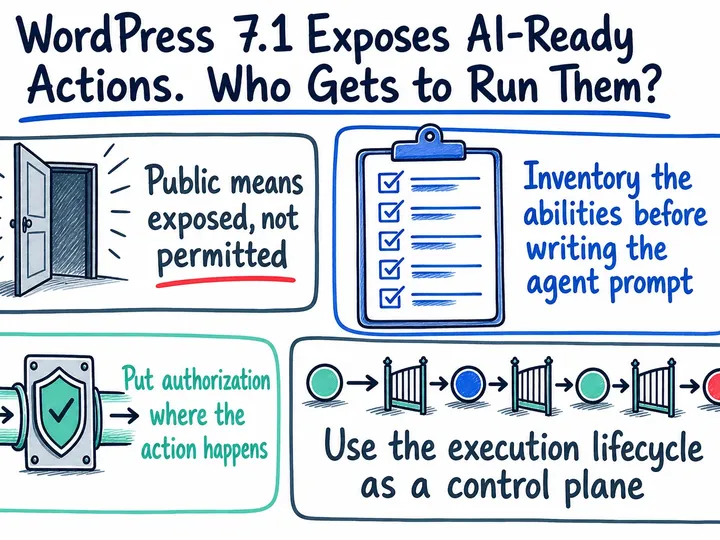
WordPress 7.0 shipped on May 20, 2026. A week later, on May 27, the core team published its React 19 upgrade note for WordPress developers. That timing matters. The release itself focuses on a stronger admin experience and a broader developer toolbox. The React note, meanwhile, tells a more practical story for teams with custom editor or admin code: another compatibility checkpoint is already on the horizon.

Sending Mail From a Linux Server with Postfix: A Practical Setup Guide

Sending mail from Linux is easy. Sending mail that actually arrives is the operational work. If this server only needs to send password resets, contact-form notices, cron alerts, invoice notifications, or internal workflow messages, your goal is not to become a mail provider. Your goal is to deliver low-volume mail consistently, with minimal maintenance and no surprise queue issues on a production box.

WordPress Cron: When to Replace WP-Cron with Server Cron

WP-Cron is fine until a site starts depending on timing. Scheduled posts that go live late, renewal emails that drift, imports that only run after a random visit, or client complaints that no one can reproduce are usually not WordPress bugs. They are symptoms of using a traffic-triggered scheduler for work that the business now treats as operationally important.

Nagios check_http notes for practical HTTPS monitoring

If you look after a revenue site, client portal, or campaign landing page, a green port-443 check is not enough. The useful question is whether a real user can reach the right host, get the expected redirect, receive the expected page or endpoint, and do it within a response time your team would actually consider acceptable. That is why check_http has stayed popular in Nagios environments for years: it is readable, easy to hand over, and already present in many client estates.

Putting an AI Phone Agent on a Real Number Is Now a Telephony Ops Project

Putting a voice model on a real phone number is no longer mostly an AI demo exercise. OpenAI now documents low-latency live audio sessions, SIP call ingress, and server-side sideband control in its Realtime stack. Twilio documents the WebSocket bridge, greeting behavior, language settings, interruptions, and session callbacks through Conversation Relay. Once that stack is live on a published number, the real question shifts. It is not just whether the model can talk. It is whether the call can be answered, directed, handed off, and accounted for without losing the caller along the way.

Pagination

  • First page
  • Previous page
  • Page 1
  • Page 2
  • Page 3
  • Page 4
  • Page 5
  • Page 6
  • Page 7
  • Page 8
  • Page 9
  • …
  • Next page
  • Last page

Review Greg on Google

Greg Nowak Google Reviews


  • WooCommerce Checkout Blocks: Default by Design, Rollback for Compatibility
  • When Google can call the business, your local data stops being cosmetic
  • Drupal CMS 2.0 Speeds Marketing Site Rebuilds, but It Is Not Autopilot
  • Your OpenAI and Cloudflare Keys Need an Expiry Date
  • Structured Outputs Shift Intake Automation From Prompts to Schema Design
RSS feed

GrN.dk web platforms, web optimization, data analysis, data handling and logistics.