Air quality in Northern Thailand is not a background issue during smoke season. If you are running a business, planning a retreat, or sending a team to Chiang Mai or nearby areas, haze can affect travel comfort, outdoor schedules, filming, property choice, and whether people can work normally. The practical mistake is to treat it as a simple yes-or-no question. It is better handled as an operating condition that needs monitoring, thresholds, and fallback plans.
Articles
If you only touch DNS a couple of times a year, Cloudflare's dashboard is usually enough. The API starts paying for itself when DNS changes are part of launches, migrations, white-label client work, or repeatable operational handovers. In those situations, the real gain is not raw speed. It is lower risk, clearer approvals, and a workflow another person can take over without guesswork.
Cloudflare deprecated Service Key authentication on March 19, 2026, and it stops working on September 30, 2026. If you still have old DNS updaters, SSL jobs, or Origin CA certificate scripts using X-Auth-User-Service-Key, this is no longer a housekeeping note. It is a dated operational dependency with a predictable failure point.
OpenAI has made file-based retrieval look almost too easy. Create a vector store, upload files, and the platform handles chunking, embeddings, and indexing for you. That is great for getting a demo running. It is not the same as having a knowledge assistant you would trust inside a real business. The same documentation that makes the setup look simple also makes the production challenge obvious: retrieval stops being mainly an API problem and turns into a governance problem.
When a live WordPress site starts throwing 500s, white screens, broken checkout steps, or random admin errors, the wrong move is to turn on noisy debugging in public and hope for the best. The better move is to collect evidence quickly, keep customer-facing pages clean, and narrow the problem to code, configuration, or cache. For business owners, operations leads, and agency teams, that usually means a short, controlled debugging window, not an open-ended experiment.
If a legacy import fails on '0000-00-00' or a default such as '2012-00-00', the database is usually telling you something useful: the schema or dump still depends on old MySQL behavior. That often shows up during host moves, CMS upgrades, vendor handovers, or rushed staging restores. The wrong reaction is to weaken the whole server first and investigate later. The better approach is to confirm what mode the import is running under, identify which tables still use zero dates, and decide whether you need a one-off compatibility bridge or a real schema cleanup.
Most WordPress sites do not need more plugins. They need a smaller, better chosen stack that helps the team publish faster, keeps the site secure, and avoids future rework. If you are running a business site, managing operations, or inheriting an agency-built setup, the real question is not which plugins are popular. It is which plugins reduce friction without turning the site into a maintenance project.
Below is the short list I still recommend most often, plus the guardrails I use when reviewing a live WordPress build.
On June 5, 2026, WordPress.org announced a temporary 24-hour cooldown before plugin and theme releases are distributed through auto-updates. That is more than a small platform change. It is a clear signal that the plugin supply chain now needs more deliberate review, and site owners should stop treating plugin updates as background noise.
If you inherited a Drupal 8 site and the business now wants all existing content to be Swedish instead of English, this is not a simple settings change. Drupal's multilingual docs still warn against changing the default language after content has been added, and as of June 7, 2026, Drupal 8 has been unsupported since November 17, 2021. For business owners and operations leads, that changes the framing: this is a controlled legacy-data change, not a quick admin task.
Composer is not just a package installer. In a Drupal or custom PHP project, it is part of your delivery system: it defines what gets deployed, which versions your team shares, and how predictable your updates are. For business owners, operations leads, and agency teams, that matters because dependency drift quickly turns into missed release windows, fragile staging environments, and emergency fixes that are hard to reproduce. The goal is simple: make Composer part of a repeatable workflow, not something somebody runs only after a site starts failing.
Debugging PHP is rarely about one magic tool. For most teams, the real problem is slower: a bug appears, nobody can see enough context, and three people start guessing from different angles. That costs time, delays releases, and turns routine defects into expensive interruptions.
On May 20, 2025, Google announced a shopping experience in AI Mode that it described as supporting the full path from inspiration to purchase. In that same announcement, Google said the experience combines Gemini capabilities with the Shopping Graph, which now holds more than 50 billion product listings and refreshes more than 2 billion of them every hour. That matters for a simple reason: Google is not treating AI shopping as a loose recommendation layer. It is grounding the experience in product data such as reviews, prices, color options, availability, and freshness.
Cleaning up /index.html and /index.php URLs is a small technical fix that often pays back in several places at once. It reduces duplicate entry points, makes analytics cleaner, and gives search engines a clearer signal about which URL you actually want indexed. It also avoids the awkward situation where campaigns, backlinks, and internal links all point at slightly different versions of the same page.
Critical CSS is the small slice of styling a browser needs to render the first visible part of a page. When a site ships one large stylesheet, the browser typically waits for that CSS before it paints meaningful content. That is why critical CSS still matters: done well, it helps users see a usable page sooner. Done badly, it creates brittle per-page hacks, broken asset paths, and a lot of maintenance for a marginal gain.
If WordPress suddenly refuses to save or publish and shows Updating failed. The response is not a valid JSON response., the editor is usually not the real problem. In most cases, WordPress is sending a background request and your server is returning the wrong thing back: an error page, a login redirect, a firewall block, a PHP warning, or a broken REST response. That is why random fixes such as installing Classic Editor or disabling security plugins sometimes appear to help, but do not actually solve the root cause.
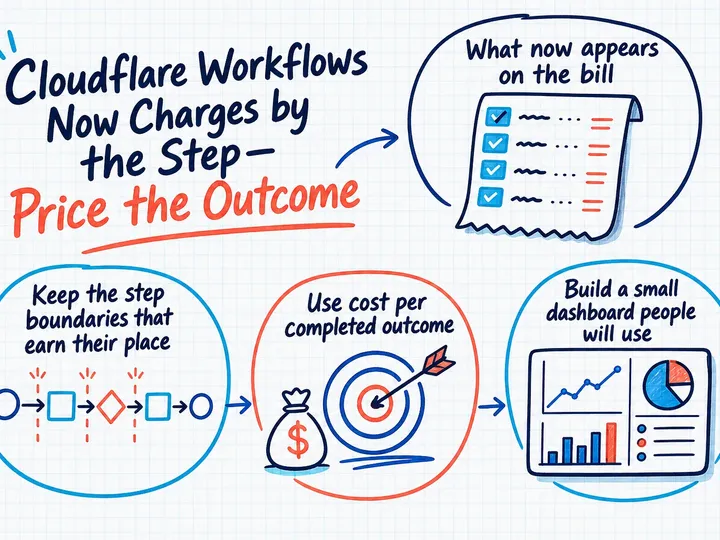
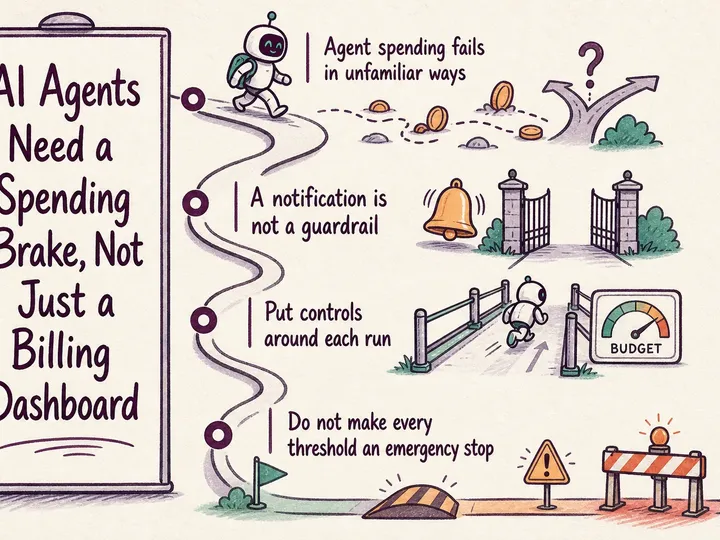
With Cloudflare's AI Gateway changes this spring, cost control has moved much closer to the request itself. The May 21, 2026 REST API update, followed by the spend-limits documentation update on June 5, 2026, means AI teams no longer have to treat budget control as a spreadsheet exercise after the fact. The gateway can sit in front of model traffic, handle logging, caching, rate limiting, and guardrails, and now expose cost controls based on spend rather than raw request count.
A messy composer.json is rarely the biggest problem in a PHP project, but it is often a reliable signal. When dependency metadata is inconsistent, teams spend more time on avoidable code review comments, merge conflicts, and handover questions. For business owners, operations leads, and agencies, that means slower delivery and more friction in otherwise routine maintenance.
The original problem behind this article is still common: you want Drupal to respect a taxonomy hierarchy in a custom View, not just dump flat term results. That sounds small, but on a live site it affects navigation, landing pages, editorial governance, and how easily visitors can move from broad topics into specific offers or content.
WordPress custom fields are still one of the simplest ways to make a site more structured, more reusable, and easier to manage. Instead of hiding important business data inside a long page body, you store it as named fields: a campaign owner, an event date, a client sector, a pricing note, a hero subtitle, or a download URL. That matters when you want content editors to work faster, designers to keep layouts consistent, and developers to reuse the same data across templates, blocks, feeds, and integrations.
Adding an AI chat widget to a website can look like a simple UX improvement. It usually is not. As soon as that assistant can read free-form user input, pull in outside content, qualify a lead, summarize a request, look up internal information, or trigger a backend step, you are no longer dealing with a demo. You are designing a business process with security, governance, and sales-operations consequences. In that context, prompt injection is not a theoretical model flaw. It is a practical risk.