GrN.dk

Main navigation

  • Articles
  • Contact
  • Your Digital Project Manager
  • About Greg Nowak
  • Services
  • Portfolio
  • Container
    • Excel Freelancer
    • Kubuntu - tips and tricks
    • Linux Apache MySQL and PHP
    • News
    • Image Gallery
User account menu
  • Log in

Breadcrumb

  1. Home

Articles

Enabling TLS for Mail on a Linux Server

Enabling TLS on a Linux mail server is no longer optional. It protects usernames and passwords in transit, gives receiving systems a basic trust signal, and helps keep operational mail out of the obvious danger zone. But TLS alone is not the whole job. If the hostname, certificate, reverse DNS, and sender authentication do not line up, you can still have a secure mail server that users do not trust and mailbox providers do not like.

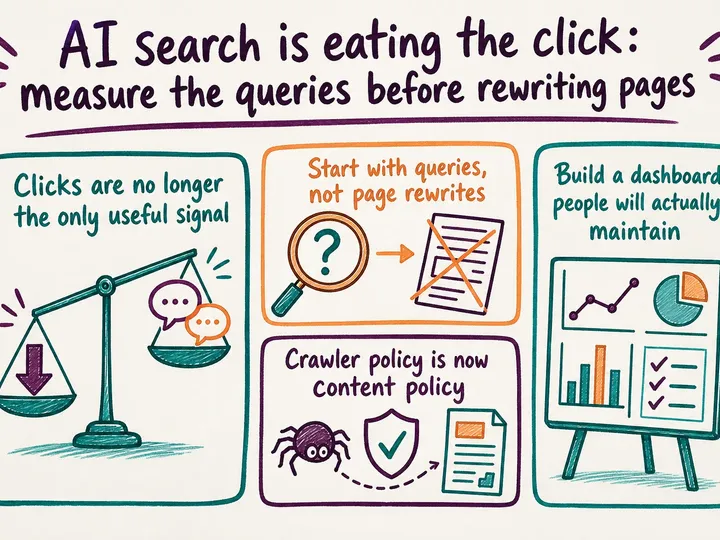
AI Search Visibility Is Now a Measurement Problem After Google's 2026 Guidance Changes

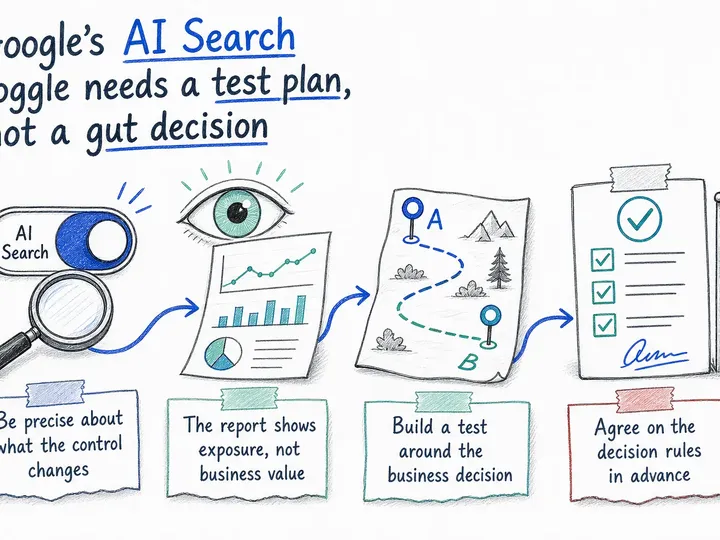
Google's May 2026 documentation updates should put an end to a lot of noise around GEO hacks. The practical takeaway is simpler than the debate around it: if you want to perform well in Google's AI search experiences, you are still doing SEO. What changed is the measurement side. A company that only watches total organic sessions, total clicks, or one blended chart showing whether search is up or down can miss what actually matters. AI Overviews and AI Mode can expand exposure for some pages, change click patterns for others, and send visitors who behave differently after the click.

JavaScript-Heavy Service Pages Still Lose Leads in 2026: A Practical Rendering Audit

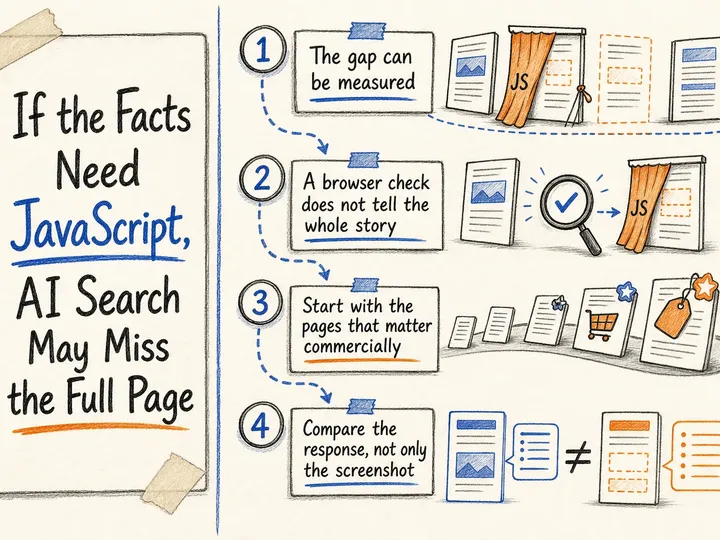
If you are paying to send people to a service page, JavaScript should be supporting the page, not withholding it. The trouble starts when the page depends on JavaScript to reveal the offer, supporting copy, trust signals, internal links, or even the form itself. On a developer laptop the page may look finished. To Google, preview bots, and slower mobile devices, it can begin as a thin shell and only become complete after hydration. That gap is where leads get lost.

When URL Parameters Become an Operations Problem: Fix Crawl Waste, Cache Fragmentation, and Duplicate URLs

URL parameters usually arrive with a reasonable excuse. A filter needs ?color=blue. Marketing appends utm_source. Internal search uses ?q=running+shoes. A CMS view adds ?region=dk&type=case-study. None of that feels strategic. Over time, though, it can create a second site made of duplicate, low-value, and sometimes effectively infinite URL combinations. At that point this is no longer just an SEO tidy-up. It becomes an operations problem.

Cloudflare's Resource Tagging Beta Turns Resource Sprawl Into a Paid Governance Cleanup

Cloudflare moved Resource Tagging into public beta on April 27, 2026. That can sound like a small product update: add custom key-value metadata to Cloudflare resources and query it later. It is more important than that. Cloudflare is clear that tags are for organization today, with access control and billing attribution planned for future releases. Once that happens, tags stop being nice-to-have labels and start affecting how the account is operated.

Cloudflare Page Rules Debt: The Quiet Failure Mode on Business Websites

Cloudflare usually enters a business website as a sensible infrastructure choice: DNS, CDN, SSL, maybe a few redirects. The problems start later. Marketing needs campaign URLs. A developer adds a bypass for /wp-admin. An agency sets a staging hostname rule. Someone migrates an old Page Rule to a modern Cache Rule. A year later, Cloudflare is no longer just "in front of the site". It is part of how the site routes, caches, and responds to search engines and users.

Fixing Website Email Deliverability in 2026: What Business Websites Need to Get Right

Your website is already part of your mail stack

If your site sends contact form alerts, quote requests, booking confirmations, receipts, password resets, account approvals, or support notifications, you are running an email operation whether you planned for one or not. The problem is that many business websites still treat this as a plugin setting or a host default. When those messages go missing, the symptom looks small but the cost is not: lost leads, delayed onboarding, broken checkout flows, and support teams chasing problems in the wrong place.

Your CMS Upgrade Is Now a Stack Project: A 2026 PHP Roadmap for WordPress and Drupal Sites

If your site earns leads, supports sales, or underpins client delivery, a CMS upgrade is no longer just a CMS task. As of May 24, 2026, the real constraint for many WordPress and Drupal sites is PHP version support, plus everything attached to it: plugins or modules, Composer dependencies, cron jobs, PHP-FPM, server config, and caching at the edge.

WooCommerce scheduled-action backlog is still a paid operations problem for stores

In WooCommerce, scheduled actions are not some back-office technicality. Woo's own documentation ties them to order notifications, payment processing, and customer emails. That matters because a store can look fine from the front end while the background queue handling renewals, payment events, and connected systems is quietly slipping. At that point, this is no longer a plugin annoyance. It is an operations problem with a cost attached.

Speculative Loading Is Now a CMS Operations Issue

Speculative loading used to be the sort of thing a performance specialist tested quietly in a lab. That is no longer the situation. It can now arrive through WordPress core, a Cloudflare setting, or Drupal tooling with little ceremony, which makes it an operations concern for real businesses, not just a browser feature for enthusiasts.

MariaDB 10.6's July 2026 end-of-life makes quiet CMS hosting debt a paid database upgrade project

MariaDB 10.6 now has a hard date on it. MariaDB says Community Server 10.6 reaches end of life on July 6, 2026. After that, there are no more security patches, bug fixes, or updates for that branch. A lot of WordPress and Drupal sites will appear perfectly fine right up until that deadline. The pages still load. Editors still log in. Orders still clear. That is exactly why this gets missed.

OpenSSH 10’s crypto changes make old SFTP integrations a paid cleanup project

The Change Is Already On The Clock

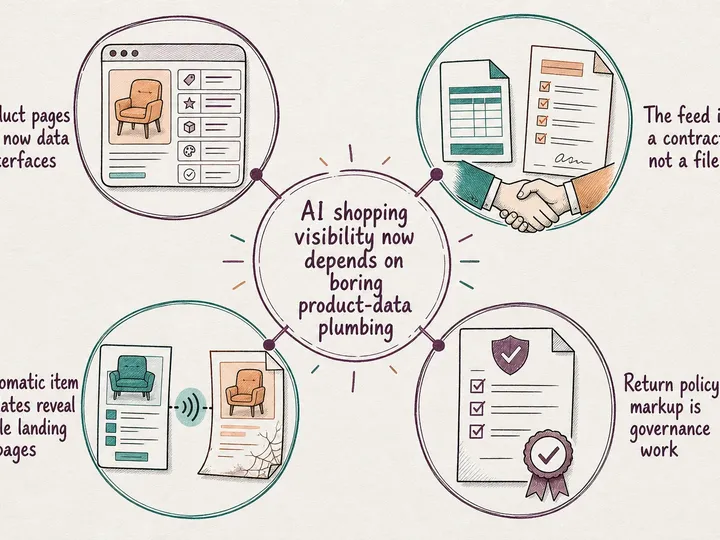
Google's August 18, 2026 Content API cutoff turns feed cleanup into a Merchant API migration project

Google has put a date on a piece of integration work many ecommerce teams would otherwise keep postponing. In its Merchant Center help documentation, Google says Content API for Shopping will remain available until August 18, 2026, and then it will be shut down. If Content API still sits inside your product sync jobs, supplemental feed scripts, status checks, local inventory tooling, or custom catalog middleware, that date changes the conversation. This is no longer a background maintenance task. It is a migration project with operational risk attached.

Form Spam Is a Lead-Quality Problem: A Practical Hardening Playbook for Business Websites

Contact forms, quote requests, registrations, comment forms, and checkout pages are not just website features. They are intake systems for sales, operations, and customer support. When spam gets through, the cost is not limited to inbox noise. It shows up as wasted follow-up, distorted campaign reporting, CRM clutter, poorer deliverability, and sometimes account or content abuse. That is why form protection should be treated as a lead-quality and operations problem, not just a security add-on.

Why Your Website's Third-Party Stack Needs Operational Ownership

Third-party code is now an operations issue

Most business sites do not feel slow because the server is down or the homepage hero image is too large. They feel slow because the browser is busy after the page loads: the consent banner initializes, the chat widget wakes up, the CRM form validates, an A/B test rewrites part of the page, and five tracking tags fire on the same click. That is your third-party stack, and once it is live it behaves like production infrastructure, not harmless marketing garnish.

Drupal 10 Has a December 2026 Deadline, So Upgrade Inventory Has Become a Real Client Project

Drupal 10 now comes with a date you can actually plan against. Drupal.org says Drupal 10 reaches end of life on December 9, 2026, that Drupal 10.6.0 is the final minor release, and that there will be no new Drupal 10 releases after that. Once that is fixed on the calendar, the conversation changes. This stops being a general intention to upgrade someday and becomes a deadline-driven inventory exercise.

NGINX 1.30 made connection reuse the default, which turns backend compatibility into paid work

NGINX 1.30.0 reached the stable branch on April 14, 2026. On paper, that can look like a routine release to schedule into the next maintenance window. In practice, it deserves more attention than that. The official news page and the community forum announcement both point to the same shift: 1.30.0 brings the 1.29.x mainline changes into stable, including Early Hints and a default proxy HTTP version of HTTP/1.1 with keep-alive enabled. That is a real performance improvement. Persistent upstream connections cut repeated handshakes, trim latency, and often help time to first byte.

WooCommerce HPOS Migration Is Now an Ops Project for Stores With Plugin and Reporting Debt

HPOS is easy to underestimate because WooCommerce surfaces it inside settings. For a new store, that is mostly fine: HPOS has been enabled by default for new installations since WooCommerce 8.2, released in October 2023. For an older store, especially one with years of plugin decisions, one-off reporting fixes, and custom operational scripts, that framing breaks down fast.

Logistics Optimization in 2026: How IT Is Transforming Supply Chains

Logistics optimization is easy to describe in big words and hard to make useful on a normal working day. In real operations the problem is rarely just "find the best route" or "use AI". The harder work is getting reliable order data, warehouse rules, vehicle limits, lead times, customer promises, and exception handling into a shape where software can actually help.

Youtube Subtitles in Any Language

I use YouTube subtitles in two different ways: to follow difficult audio and to understand videos in languages I do not speak well. They are not perfect, but they are often good enough to turn an unusable video into something useful.

Subtitles help when the speaker talks quickly, the recording is noisy, the accent is unfamiliar, or you are watching without sound. For language learning they are also useful because you can connect the spoken words with text on screen. For creators, captions can improve accessibility and make videos easier to reuse in other countries.

Pagination

  • First page
  • Previous page
  • …
  • Page 2
  • Page 3
  • Page 4
  • Page 5
  • Page 6
  • Page 7
  • Page 8
  • Page 9
  • Page 10
  • …
  • Next page
  • Last page

Review Greg on Google

Greg Nowak Google Reviews


  • WooCommerce Checkout Blocks: Default by Design, Rollback for Compatibility
  • When Google can call the business, your local data stops being cosmetic
  • Drupal CMS 2.0 Speeds Marketing Site Rebuilds, but It Is Not Autopilot
  • Your OpenAI and Cloudflare Keys Need an Expiry Date
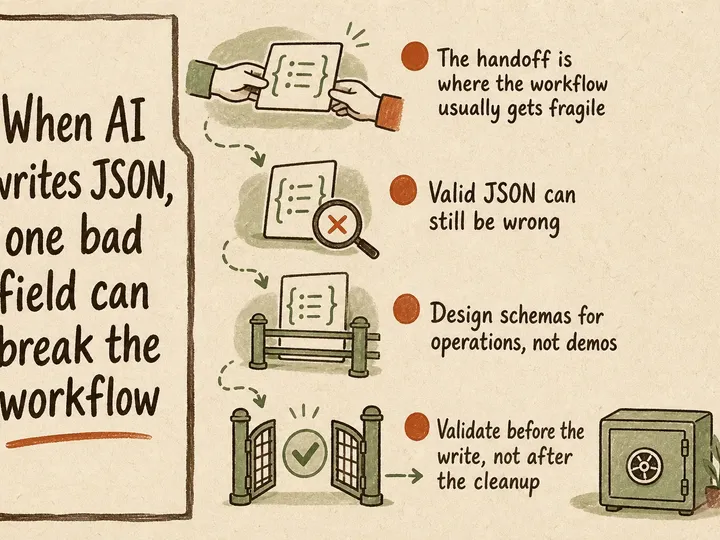
  • Structured Outputs Shift Intake Automation From Prompts to Schema Design
RSS feed

GrN.dk web platforms, web optimization, data analysis, data handling and logistics.