Your Best Content Is Behind JavaScript. Can AI Search Read It?

Check whether AI crawlers can reach your service and product content. Compare response HTML with rendered pages, then identify practical CMS and rendering fixes.
Check whether AI crawlers can reach your service and product content. Compare response HTML with rendered pages, then identify practical CMS and rendering fixes.
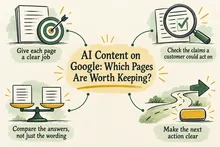
Decide which AI-assisted pages to keep, improve, combine or remove. Check claims, page overlap and metadata, then put clear review controls into your CMS.
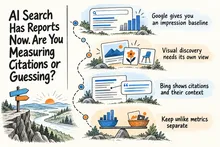
Google and Bing now offer first-party AI search visibility reports. Here’s how to build a useful baseline without inventing a misleading GEO score.

Cloudflare’s September bot defaults give publishers more control, but one training block could also cut search crawling and AI-driven discovery.
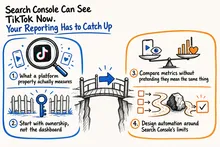
Google can now report how social profiles appear in Search. Here is how to measure cross-channel discovery without mistaking visibility for business results.
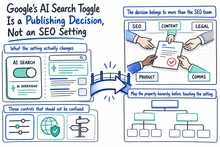
Google’s AI Search toggle forces a commercial choice about visibility, attribution and content use. Here’s how to make that choice responsibly.

Build a defensible AI visibility dashboard with fixed prompts, repeat testing, separate metrics, raw evidence, and clear ownership for every decision.
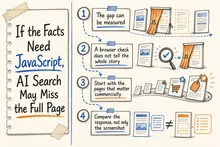
Learn how to find and fix JavaScript rendering gaps that can hide services, prices, contact details and metadata from AI search crawlers.
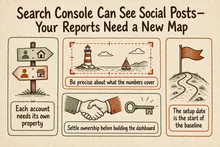
Search Console now reports how social posts perform across Google. Here’s a practical way to manage properties, permissions, baselines and exports.
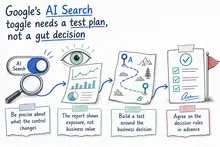
Google’s AI Search control is available worldwide. Here’s how to check its scope, read the new reports, and make an inclusion decision based on business value.
Written recommendations from Trafik og Veje, Aarhus Municipality (2011) and AgroTech (2010).
