Cloudflare Free Protects Your Site. Where Does It Stop?
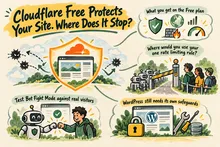
Cloudflare Free provides useful website protection, but its rate limiting and bot controls have limits. Here is how to assess them for a WordPress site.
Cloudflare Free provides useful website protection, but its rate limiting and bot controls have limits. Here is how to assess them for a WordPress site.

AI crawlers can copy a familiar name. Here’s how to verify signed agents at the edge while keeping legitimate automated traffic moving.
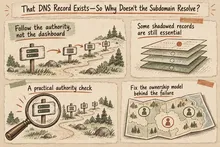
Why a DNS record can exist in a dashboard yet fail publicly—and how to trace zone cuts, verify glue, and fix the right side of a live delegation.
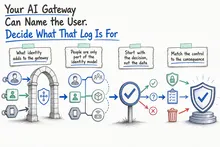
Identity-aware AI Gateway logs can help control spend and investigate unusual activity. Decide what to record, who can inspect it, and when to delete it.
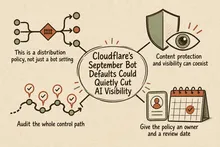
Cloudflare’s September bot defaults give publishers more control, but one training block could also cut search crawling and AI-driven discovery.
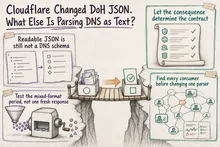
Cloudflare’s DoH JSON changes can break DNS scripts without breaking HTTP requests. Learn what changed, where to look, and how to prioritise a reliable repair.
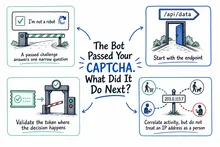
Passing a challenge is only one signal. Session analysis, server-side validation and endpoint-specific controls help reduce bot abuse without blocking customers.
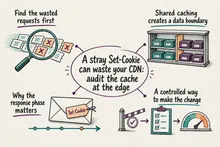
Cloudflare Cache Response Rules can recover wasted CDN capacity, but first you need a route-level audit of public, personal and authenticated responses.

Cloudflare Service Keys stop working on September 30, 2026. Here is how to find every caller, move to scoped API tokens and avoid a late outage.
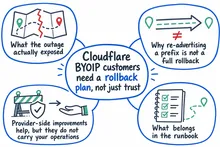
Cloudflare BYOIP recovery needs more than re-advertising a prefix. Build a practical rollback plan covering service bindings, fallback routes, owners, and testing.
Written recommendations from Trafik og Veje, Aarhus Municipality (2011) and AgroTech (2010).
