Your Best Content Is Behind JavaScript. Can AI Search Read It?

Check whether AI crawlers can reach your service and product content. Compare response HTML with rendered pages, then identify practical CMS and rendering fixes.
Check whether AI crawlers can reach your service and product content. Compare response HTML with rendered pages, then identify practical CMS and rendering fixes.
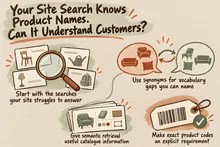
Improve site search for customers who use everyday language. See where synonyms, semantic retrieval and behavioural signals help, while keeping product codes reliable.
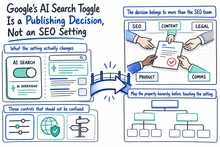
Google’s AI Search toggle forces a commercial choice about visibility, attribution and content use. Here’s how to make that choice responsibly.
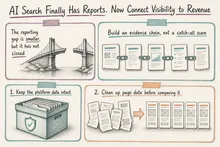
Google and Bing now report AI search visibility. Learn how to connect impressions and citations with analytics, qualified leads, and revenue responsibly.
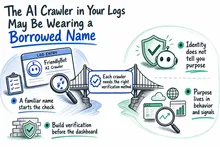
A User-Agent is a claim, not proof. See how to verify AI crawler traffic before it shapes reporting, robots.txt decisions, or WAF exceptions.
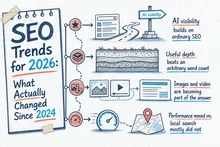
What changed in SEO from 2024 to 2026? A practical plan for AI visibility, Core Web Vitals, local search, measurement and responsible data use.
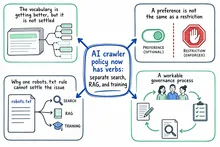
AI crawler rules now need separate decisions for search, RAG, and training, backed by practical testing across robots.txt, CDNs, WAFs, and CMS controls.
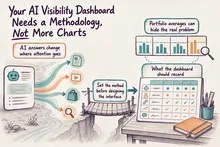
Build a defensible AI visibility dashboard with fixed prompts, repeat testing, separate metrics, raw evidence, and clear ownership for every decision.
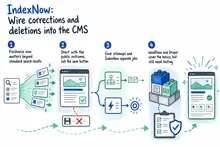
Connect IndexNow to the full CMS lifecycle so corrections, redirects and removals reach search engines quickly—with testing, queues and monitoring.
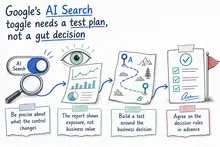
Google’s AI Search control is available worldwide. Here’s how to check its scope, read the new reports, and make an inclusion decision based on business value.
Written recommendations from Trafik og Veje, Aarhus Municipality (2011) and AgroTech (2010).
