OpenAI Evals Is Closing: Keep Your Workflow Tests Running
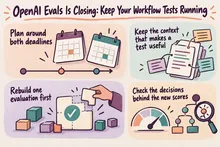
OpenAI’s hosted Evals platform is closing. Preserve your tests, validate replacement scoring and keep releases covered before the October and November 2026 deadlines.
OpenAI’s hosted Evals platform is closing. Preserve your tests, validate replacement scoring and keep releases covered before the October and November 2026 deadlines.
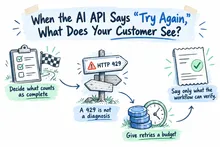
When an OpenAI request stalls, customers need an accurate status. Set sensible retry limits, preserve submissions, and make unresolved work visible.
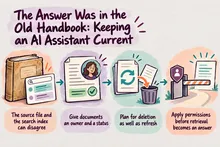
An internal AI assistant can cite an obsolete handbook with confidence. Here is how to manage document ownership, updates, deletions, access and answer review.
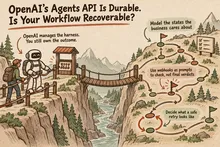
OpenAI can keep agent sessions running, but reliable workflows still depend on clear failure states, safe retries, validation, limits and human fallback.
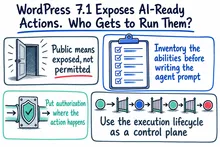
WordPress 7.1 makes site abilities easier for AI clients to discover. Here is how to review exposure, limit permissions, and keep sensitive actions under human control.
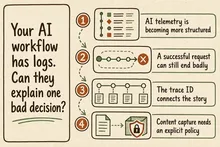
A practical guide to tracing one bad AI decision across retrieval, model calls, tools and APIs—without creating a sensitive-data archive.
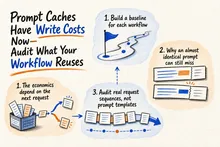
Prompt caching can save money or add wasted writes. Learn how to audit reuse, choose cache boundaries and measure the real cost of a completed AI workflow.
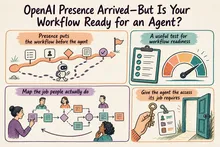
OpenAI Presence can put voice and chat agents into real workflows. Use this readiness test to scope access, handoffs, evaluation, and ownership before launch.
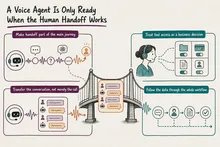
A practical release guide for voice agents: define escalation triggers, preserve context, limit tool access and measure whether human handoffs resolve calls.
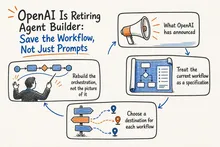
OpenAI’s Agent Builder shuts down on 30 November 2026. Here’s what to preserve, how to choose a replacement, and how to test it before moving live work.
Written recommendations from Trafik og Veje, Aarhus Municipality (2011) and AgroTech (2010).
