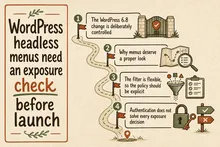
Before a headless WordPress launch, verify which menu endpoints are public, what their JSON reveals, and how access, CORS, and caching are controlled.
Recent content
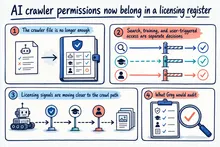
Manage search, AI answers, model training and licensed reuse separately with a practical crawler register that connects policy, configuration and evidence.
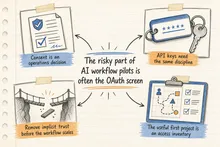
Before approving an AI workflow, review its OAuth scopes, identities, spending controls and shutdown plan with this practical pilot checklist.
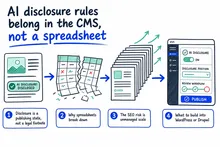
Build AI disclosure and human review into WordPress or Drupal so compliance evidence, editorial accountability, and search quality stay connected.
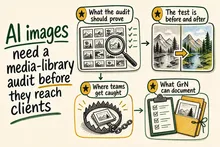
AI-image provenance can change during CMS resizing, optimization, and CDN delivery. Learn how to test the full media path before client approval.
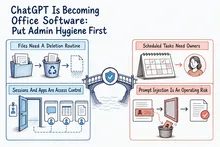
ChatGPT now has files, sessions, apps, and scheduled work. Treat it like office software: audit access, clean up retained data, and limit risk.
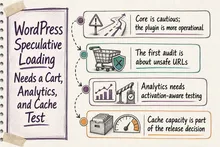
Before enabling WordPress prerendering, test cart state, analytics, personalization, and cache load with this practical speculative loading QA plan.
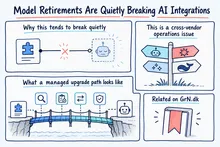
Hard-coded AI model IDs can fail when vendors retire models. A practical guide to finding, testing, and migrating integrations before shutdown dates arrive.
Drupal’s June security fixes reveal where update routines fail. A practical guide to Composer checks, supported versions, staging, and dependable deployment.
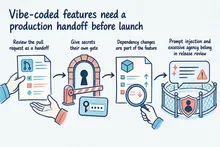
AI coding agents can move features into pull requests quickly. Before launch, teams still need review, secret scanning, dependency checks, and release discipline.
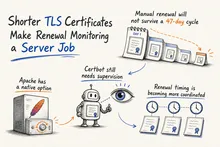
Public TLS lifetimes are moving from 200 days toward 47. Manual renewal is now a reliability risk across ACME, reloads, monitoring, and rollback.
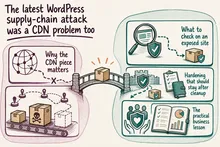
A practical response to the June 2026 WordPress CDN supply-chain attack: who was exposed, what to check, and how to prevent another compromise.
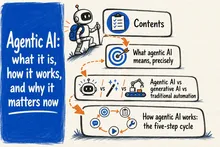
A practical guide to agentic AI: how it differs from chatbots and automation, where it creates value, and how to pilot it without losing control.
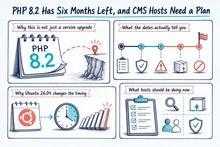
PHP 8.2 support ends on December 31, 2026. Here is a practical plan for testing and migrating WordPress, Drupal, and custom PHP estates.
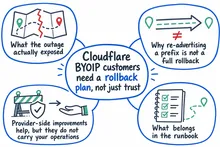
Cloudflare's February 2026 BYOIP outage showed that provider resilience has limits. If your prefixes carry production traffic, rollback needs to be mapped and tested.
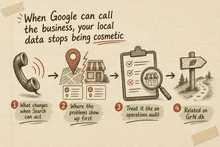
Google Search is starting to book and call local businesses, which makes hours, service areas, phone routing, and landing-page accuracy part of day-to-day operations.

Plan safer OpenAI and Cloudflare access: replace stored keys where possible, scope remaining tokens, and test rotation before expiry interrupts your business.

Apache 2.4.68 fixes proxy, HTTP/2 and .htaccess flaws. Use the upgrade to inventory modules, simplify routes and test the edge before production.
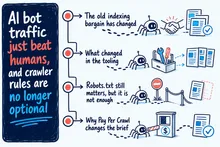
Bot requests now exceed human web traffic. Learn how to audit AI crawlers, set path-level rules, enforce robots.txt, and measure the business return.
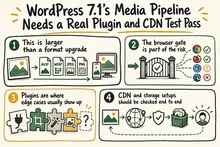
WordPress 7.1 shifts image resizing and format work into the browser. Site owners should test plugins, CSP, fallbacks, and CDN-backed media before rollout.
Written recommendations from Trafik og Veje, Aarhus Municipality (2011) and AgroTech (2010).
