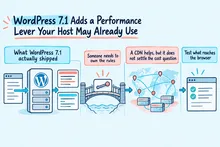
WordPress 7.1 lets hosts tune speculative loading. Learn who controls it, which pages to exclude, and how to test faster navigation against server load.
Recent content
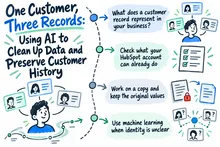
Multiple records for the same customer in HubSpot? Learn how CVR number matching, AI suggestions and human approval can help you clean up duplicates while keeping track of fields, associations and customer history.

Before a Google AI shopping pilot, check which products qualify, where your catalog data disagrees, and whether checkout reflects your delivery and return terms.

Find out whether prompt caching cuts your AI API cost per usable result. Compare cache writes, reads, retries and review time, then check the provider's bill.

A practical Drupal translation workflow for Danish service pages: German review, commercial approval, publication and keeping translations current after edits.
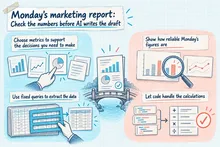
Build a weekly marketing report from GA4 and Google Ads with verified calculations, clear data caveats and a short AI draft to support your Monday meeting.

Test your team’s local AI workload before buying a GPU. Measure output quality, memory, busy-period response times, and cost to make a confident hardware decision.
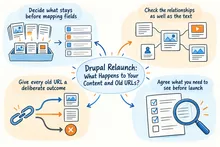
Planning a Drupal relaunch? Decide what happens to content, translations and old URLs, with practical migration checks and clear responsibilities before launch.
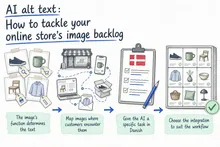
Use AI for your online store’s alt text with a manageable pilot: map the images, generate suggestions in Danish, and check the results in WordPress and WooCommerce.
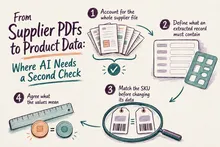
Turn supplier PDFs into product data you can trust. Check file coverage, SKU matches, pack prices and units, then test a small import before updating your catalogue.
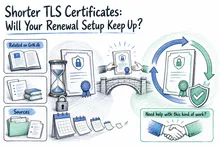
Prepare for shorter TLS certificate lifetimes with practical checks for domain validation, renewal scheduling, deployment, external monitoring and clear ownership.
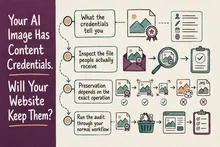
Do your AI images keep their Content Credentials after publishing? Audit WordPress, Drupal, optimizers, and CDN delivery with a practical verification workflow.
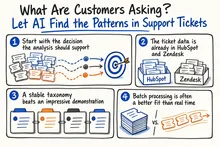
AI-based ticket analysis can uncover recurring complaints, product defects and gaps in documentation—without the company needing yet another chatbot.
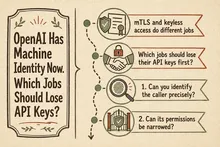
Which OpenAI jobs should replace API keys? Compare X.509, OIDC and mTLS, assess readiness, and plan a practical migration with clear ownership and recovery.
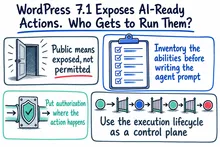
WordPress 7.1 makes site abilities easier for AI clients to discover. Here is how to review exposure, limit permissions, and keep sensitive actions under human control.
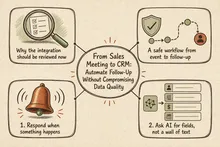
How to use AI for meeting notes and follow-up while fixed rules protect CRM data, customer matching and the sales pipeline from errors and premature changes.
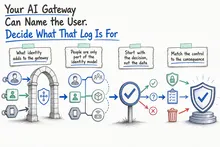
Identity-aware AI Gateway logs can help control spend and investigate unusual activity. Decide what to record, who can inspect it, and when to delete it.
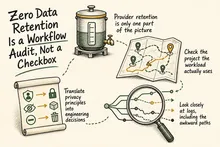
Zero Data Retention covers the provider, not every copy in your stack. See how to audit endpoints, logs, storage, deletion and project-level controls.
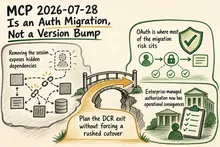
MCP 2026-07-28 removes protocol sessions and hardens OAuth. Use this practical plan to migrate clients, servers and access controls safely.
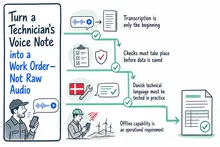
Voice input can reduce the technician’s documentation burden when hours, materials and status are validated before the information is saved in the work order system.
Written recommendations from Trafik og Veje, Aarhus Municipality (2011) and AgroTech (2010).
