Is Prompt Caching Actually Lowering Your AI API Bill?

Check whether prompt caching reduces cost per completed task, accounting for cache writes, retries, review effort and the charges on your provider's bill.
Check whether prompt caching reduces cost per completed task, accounting for cache writes, retries, review effort and the charges on your provider's bill.
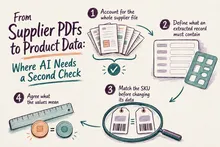
Supplier files need more than extraction. Here’s how to check coverage, match SKUs, resolve unclear units and prices, and test product data before a catalogue import.
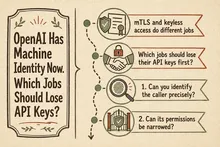
OpenAI’s X.509 workload identity can replace API keys for the right workloads. This practical framework helps teams decide where to start safely.
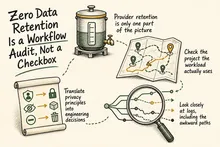
Zero Data Retention covers the provider, not every copy in your stack. See how to audit endpoints, logs, storage, deletion and project-level controls.

The EU’s transparency requirements for AI chatbots now apply. Here is how to make your bot’s identity clear, limit its system access and provide a genuine route to a member of staff.
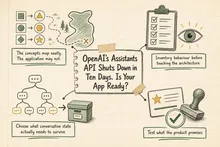
OpenAI’s Assistants API is no longer available. Use this practical plan to restore service, rebuild state, and migrate safely to the Responses API.
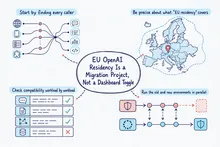
An EU-resident OpenAI API setup needs a new project, regional routing, dependency and state migration, compatibility testing, and clear governance evidence.

A practical release guide for voice agents: define escalation triggers, preserve context, limit tool access and measure whether human handoffs resolve calls.
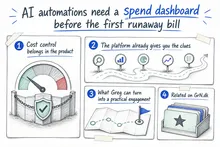
AI automations can burn budget through retries, background agents, and repeated context. Add spend visibility before useful work becomes surprise cost.
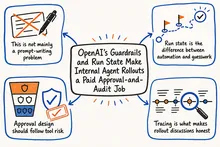
OpenAI's agent documentation points to a practical reality for internal automation: once an agent can update records or trigger actions, the valuable work shifts to approval design, run-state logging, observability, and staged rollout governance.
Written recommendations from Trafik og Veje, Aarhus Municipality (2011) and AgroTech (2010).
