Your AI Workflow Finished. Where Did the Customer Data Go?
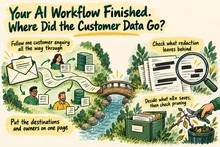
Follow customer data through n8n, OpenAI and your CRM. Check who can access retained copies, what redaction hides and whether deletion works before scaling.
Follow customer data through n8n, OpenAI and your CRM. Check who can access retained copies, what redaction hides and whether deletion works before scaling.
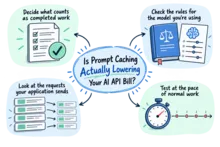
Find out whether prompt caching cuts your AI API cost per usable result. Compare cache writes, reads, retries and review time, then check the provider's bill.
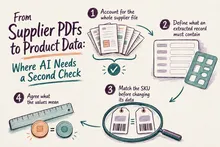
Turn supplier PDFs into product data you can trust. Check file coverage, SKU matches, pack prices and units, then test a small import before updating your catalogue.
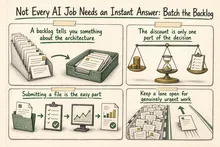
Move delay-tolerant AI work into dependable batch queues to cut processing costs without compromising quality, data controls, or urgent workflows.
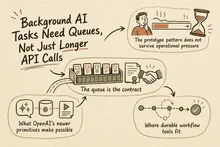
Build reliable background AI tasks with job queues, approval gates and safe retries. A practical guide to choosing the right workflow and recovering failed jobs.
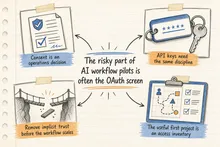
Before clicking Allow on an AI workflow pilot, check its permissions, data access, ownership, spending limits and shutdown plan with this practical checklist.
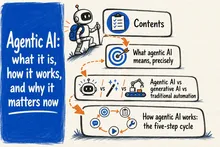
Agentic AI can act across tools, but it needs boundaries. Learn how it works, when it beats simpler automation, and how to run a controlled business pilot.
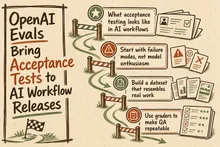
Learn how to use OpenAI evals, graders, red-team cases, and release gates before prompt, model, tool, or routing changes go live.
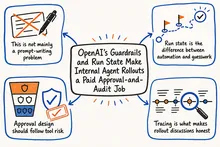
Plan an OpenAI agent rollout with practical guardrails, human approvals, saved run state and audit records your operations team can use and maintain.
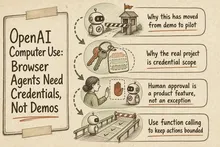
A practical guide to taking OpenAI computer use beyond the demo with safer credentials, approval gates, isolated browsers, and recoverable operations.
Written recommendations from Trafik og Veje, Aarhus Municipality (2011) and AgroTech (2010).
