If you operate in Thailand, even a tiny sourcing note can save real time. The original version of this page was just two raw store links. That worked as a personal bookmark, but it was too thin for a business owner, operations lead, or agency team that needs repeatable buying, cleaner handoffs, and fewer ordering mistakes. This updated note keeps the same intent: a short list of online store links in Thailand that are worth checking, with enough context to make the links useful.
As of June 3, 2026, these links still point to relevant Thai marketplace or supplier pages, but stock, pricing, and pack sizes change fast on marketplaces. Treat this as a working shortlist to validate at order time, not a permanent directory.
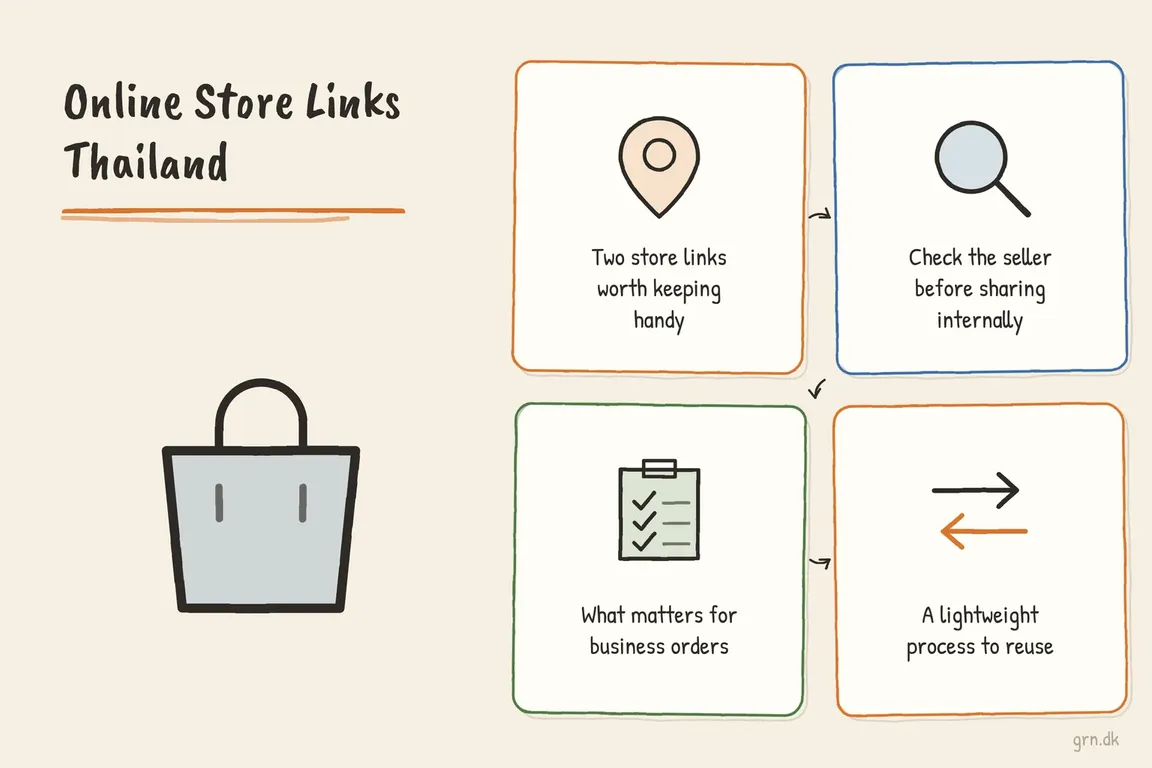
Two Thailand Store Links Worth Keeping Handy
1. InLi Kasat FarmIf you are specifically looking for chaya plants or chaya powder, the original article pointed to shopee.co.th/inlikasatfarm. I could also confirm that InLi Kasat Farm still has an indexed public site at inlikasatfarm.vegancampthailand.com, which helps validate the supplier identity even if individual marketplace listings move around. For niche agricultural products, that matters. It gives you a second reference point before you hand the link to a colleague or client.
2. Chiangmai BakermartFor non-bleached flour, oats, and broader baking or pantry supplies, shopee.co.th/cmbakermart is the more practical general-purpose link. Recent search results still show it as an active Shopee Thailand store, and it is the kind of seller that is useful when the requirement is not one specialist ingredient, but regular access to basic dry goods and related kitchen supplies.
That may sound simple, but clarity is the whole point. A vendor list becomes much more useful when each link has an obvious role: one specialty source and one broader pantry source. That is the difference between “someone found a store” and “the team has a reasonable place to start.”
How to Check a Thai Marketplace Store Before You Share It Internally
If you pass store links to a client, office manager, or production team, do a five-minute validation first.
- Keep the transaction inside Shopee. Shopee's own safety guidance says purchasing, payment, and problem resolution should stay on-platform. If a seller tries to move the deal into LINE, a direct transfer, or another off-platform channel, that is an immediate warning sign.
- Open live product pages, not only the storefront. A store can look active while the exact SKU you need is out of stock, renamed, or bundled in a way that changes the real unit cost.
- Check pack size carefully. A one-kilogram item, a multi-pack, and a wholesale tier can look similar in thumbnails but create very different totals at checkout.
- Decide whether this is a one-off order or a repeat supplier. That changes how much effort you should spend on lead times, substitutions, invoice handling, and backups.
What Matters for Business Orders
For personal shopping, a decent price and acceptable reviews may be enough. For a business, agency, or operations team, there are a few extra checks that save downstream friction.
Look for quantity pricing. Shopee Thailand documents a wholesale feature that lets buyers filter for wholesale items and view quantity tiers on the product page. If your office, studio, or client team reorders the same basics, that is an easy way to reduce unit cost without overcomplicating the purchase process.
Check invoice requirements before you buy. Shopee documents e-Tax Invoice and e-Receipt flows, and some sellers support buyer-side tax invoice requests. If the purchase needs to survive internal accounting review, confirm invoice support before payment rather than chasing paperwork after delivery.
Be realistic about delivery promises. Marketplace shipping in Thailand can be fast, but the useful operations habit is still to confirm the lead time on the exact SKU you need. This is especially important when the item is niche, when you are ordering for an event or shoot, or when missing the delivery window creates avoidable operational mess.
A Lightweight Process Greg Would Usually Recommend
If this kind of ordering happens more than once, do not leave it as a loose note in chat. Turn it into a one-page sourcing sheet.
- Record the store URL, the exact product URL, and what the supplier is best for.
- Add the last-checked date, the typical pack size, and a rough working price range.
- Note whether the store supports repeat buying, wholesale tiers, or tax-invoice needs.
- Keep one backup supplier for any item that affects production, events, office operations, or client delivery.
That sounds small, but it prevents the usual failure mode: someone reorders quickly, picks a similar listing from a different seller, and only discovers later that the size, quality, or paperwork is wrong.
Why This Matters More Than It Looks
A page like this is not really about chaya or flour. It is about reducing friction in local operations. Teams working across countries lose time on dozens of minor sourcing decisions that do not feel strategic on their own. In aggregate, they become missed handoffs, finance cleanup, and rushed last-minute purchases.
If you are running a small business or supporting client operations in Thailand, the smart move is usually not to build a heavy procurement system. It is to keep a lightweight, validated shortlist of suppliers and maintain it with basic discipline. This page is a starting point: one specialty supplier lead and one broader pantry supplier lead, both tied to Thailand-based buying flows that are easy to test and easy to update.
If you need help turning scattered local links into a cleaner sourcing process, a more usable operations checklist, or a lightweight reference your team can actually follow, Greg can help without overengineering the problem.
Need help with this kind of work?
If your team needs vendor validation, a cleaner sourcing shortlist, or a lightweight Thailand buying process, Greg can help turn scattered links into something operational. Get in touch with Greg.