Cases

A selection of the work: what the client needed, what was built, and what it changed. Each case links through to the full write-up.

AI workflow automation

An interactive demo of the Trello-to-AI workflow

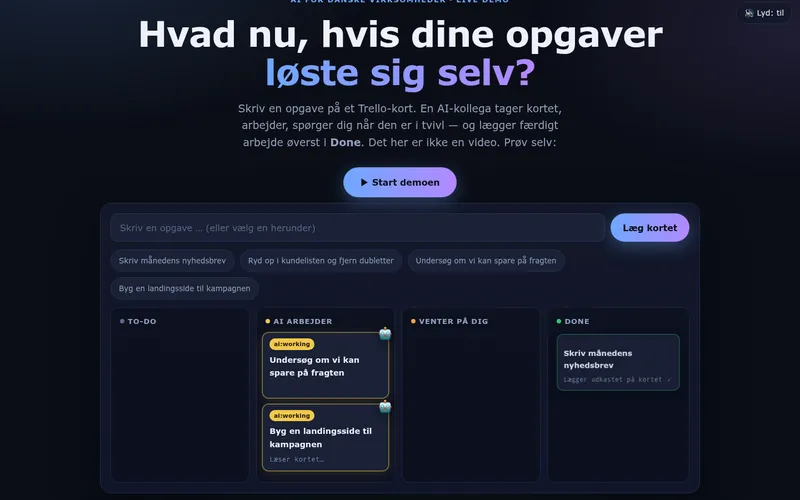
One Trello card asked for something that would show — not tell — how a Danish company can hand work to an AI colleague. The answer was cases.grn.dk: a self-contained interactive page where the visitor types a task, watches an AI pick it up, gets asked a question, answers it, and sees the finished card land at the top of Done. The brief, the domain, the design, the copy, the sound and the publication were all handled by the AI setup the page describes.

GrN.dk — internal build
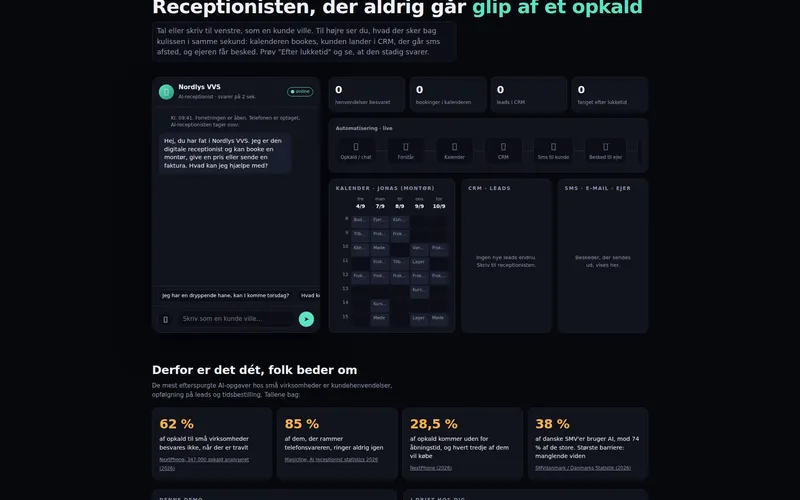
AI receptionist / small-business automation

An AI receptionist that never misses a call — with the back office on screen

Frontdesk 24/7 is an AI receptionist for a fictional Danish plumbing firm, Nordlys VVS, that you talk to the way a customer would — by voice or text, in opening hours or after them. The point of the demo is the split screen: while the receptionist answers on the left, the back office animates on the right — the calendar books itself, the caller lands in the CRM, a confirmation SMS goes out and the owner gets a message. Nothing is described; everything is shown happening.

GrN.dk — demo shelf (demo.grn.dk)

Accounting automation / UK practices

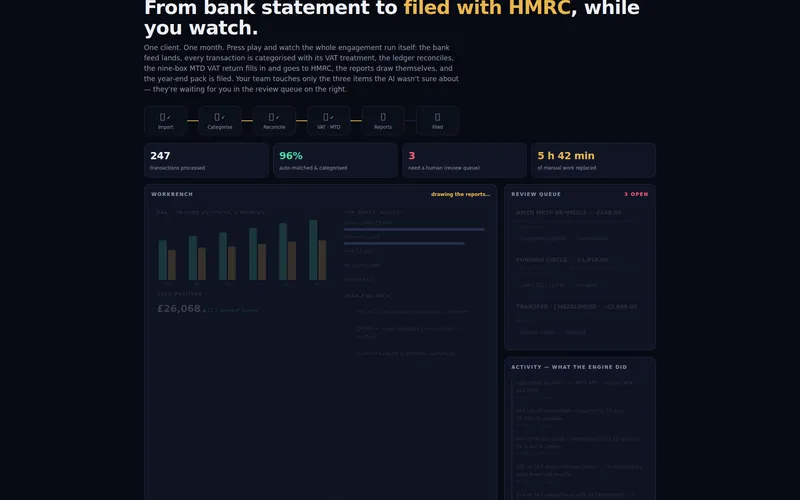
One client’s month runs itself: bank feed to a filed VAT return, while you watch

AutoLedger is a guided walkthrough for UK accounting practices: one fictional client (Hazelbrook Coffee Roasters Ltd), one month, and a play button. The bank feed lands, every transaction is categorised with its VAT treatment, the ledger reconciles, the nine-box MTD VAT return fills itself in and goes to HMRC, and the reports draw themselves — while an activity log narrates what the engine is doing and why. Nothing leaves the browser; the client, the bank and the filing are all simulated.

GrN.dk — demo shelf (demo.grn.dk)

ERP / open-source business systems

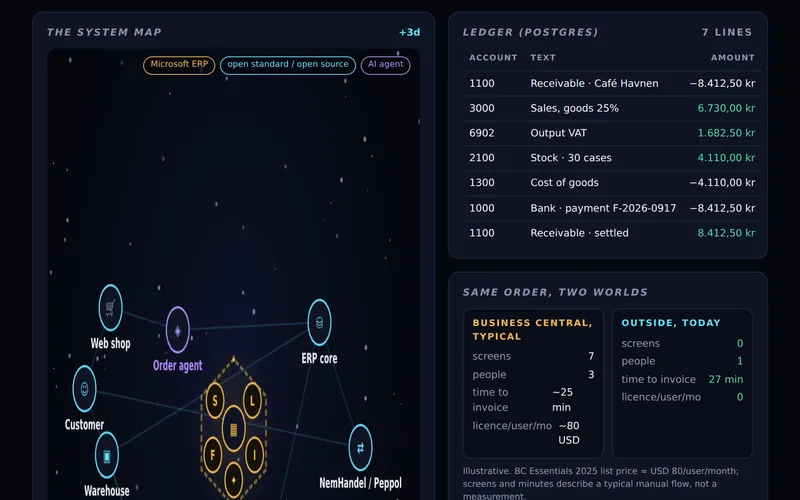
There is a world outside Microsoft ERP: one Danish wholesaler's order, run on an open stack

Udenfor (“Outside”) follows one order through one day at Nordvind Foods, a fictional Aarhus wholesaler with 14 staff and a web shop — on an open stack instead of Business Central. It plays in three acts: the camera zooms out of the Microsoft walled garden onto a live system map where an order agent, an open-source ERP core on Postgres, the warehouse scanner, GLS, NemHandel/Peppol e-invoicing, a PSD2 bank feed and the tax export light up in turn while the ledger posts itself; then you ask the books a question in plain Danish and watch the SQL and the answer appear; then you change a business rule in one sentence and see it tested and deployed in seconds, next to the 26-day partner change-request timeline it replaces.

GrN.dk — demo shelf (demo.grn.dk)

Maintenance automation / DevOps

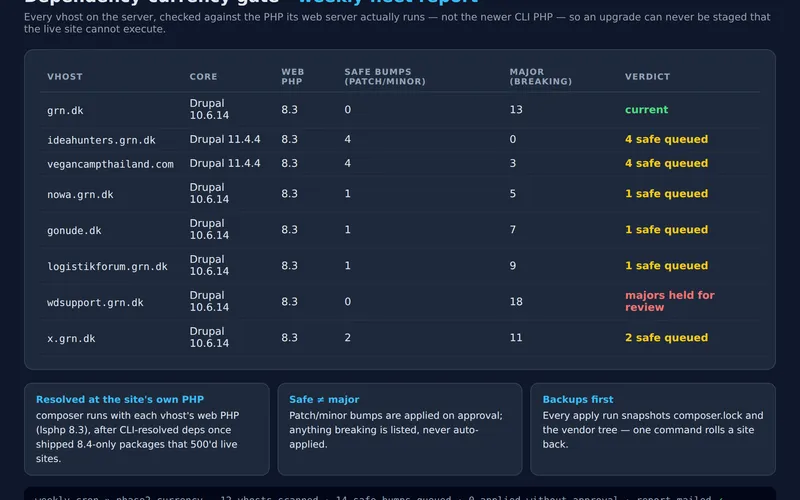
The boring superpower: a weekly gate that keeps twelve sites' dependencies current

Twelve production websites on one server, each with its own Composer dependency tree, and the oldest question in hosting: are they up to date, and is it safe to make them so? The dependency-currency gate answers it weekly and automatically — it inventories every vhost, checks each dependency tree against the PHP version that site's web server actually runs, queues the semver-safe updates for approval, and reports the breaking ones instead of applying them.

GrN.dk — server fleet (12 production vhosts)

Personal automation, public-source scraping and AI-assisted filtering

A private job radar that reads seven boards every morning — and throws away most of what it finds

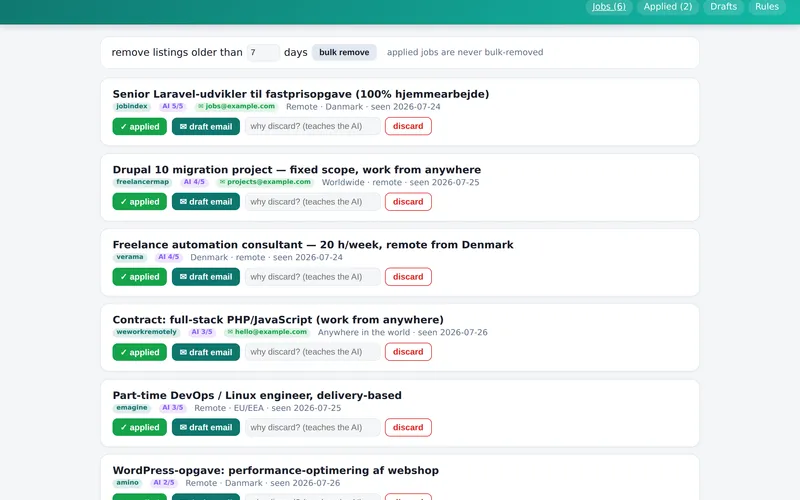
This one has no link on it, and that is the point: jobs.grn.dk answers 401 to the internet and always has. It is an internal tool — a job radar, built for its owner's own search for work. Every morning it reads seven contract and job boards, drops everything that cannot match a written profile, has what survives judged by a language model against that profile, and presents the handful worth reading as one screen with three buttons: applied, draft email, discard.

Because it holds one real person's live job search, nothing of it is published here. The screenshot above is a throwaway demo copy of the same interface, seeded with invented rows — every company, title, location and address in it is a placeholder, and it labels itself "demo data" in the header so it can never be mistaken for the live board.

GrN.dk — internal build

AI governance / data protection

An AI control layer cast in glass: watch personal data become tokens mid-flight

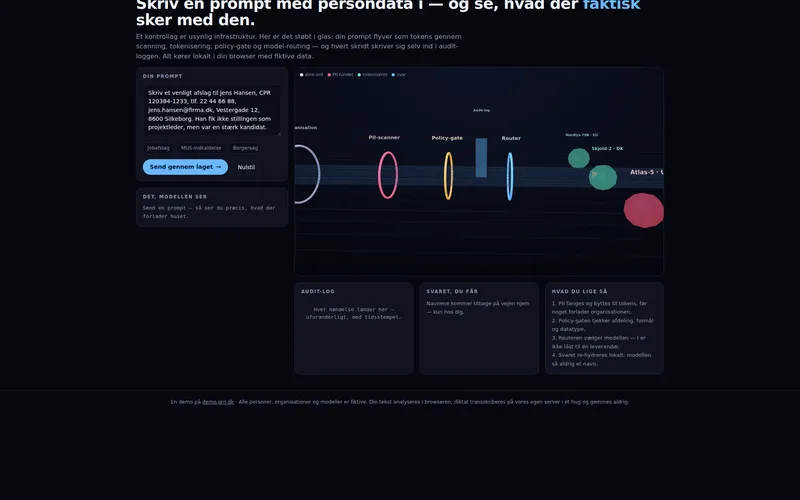
Kontrollaget (“the control layer”) makes invisible AI infrastructure visible. It is a three-act demo for Danish organisations, in Danish and English: write a prompt containing personal data and watch it fly as tokens through a glass pipeline — PII scanner, policy gate, model router — with every step writing itself into an audit log; relive a US provider’s shutdown day with and without a control layer in place; then try to beat the anonymiser yourself in a live redaction playground.

GrN.dk — demo shelf (demo.grn.dk)

Quantitative research tooling and automation

A trading rig that tests its own strategies every hour — and never places an order

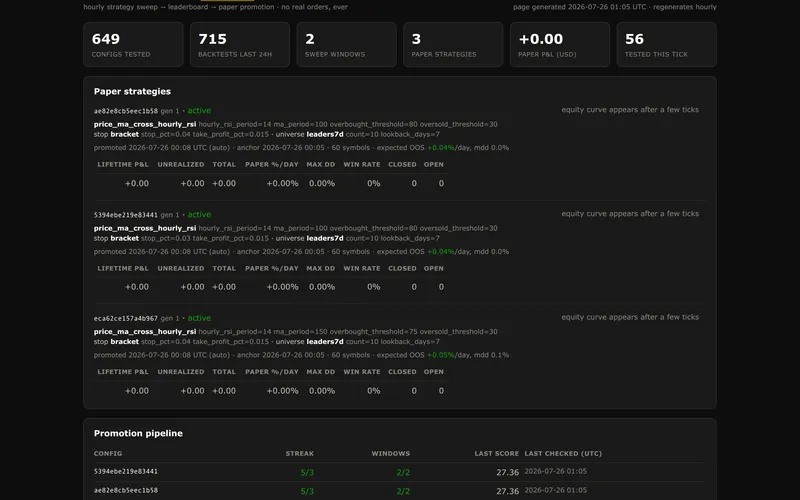
crypto-dash.grn.dk is the public window onto a strategy-research rig that runs on our own server and trains itself. Every hour it backtests a fresh batch of trading-strategy configurations against five-minute crypto candles, scores each one on data it was not fitted to, keeps a running leaderboard, promotes the configurations that hold the top into a simulated book, and demotes them again as soon as their forward behaviour drifts away from what the backtest promised.

It is paper trading only. The installation holds no exchange keys, calls no order endpoint and has no account to spend from. Every fill, every position and every P&L figure on that page is simulated — which is why the page prints PAPER ONLY on itself, in orange, at the top of every hourly regeneration.

GrN.dk — internal build

AI content automation

This site writes its own articles — every morning, with a hand-sketched infographic

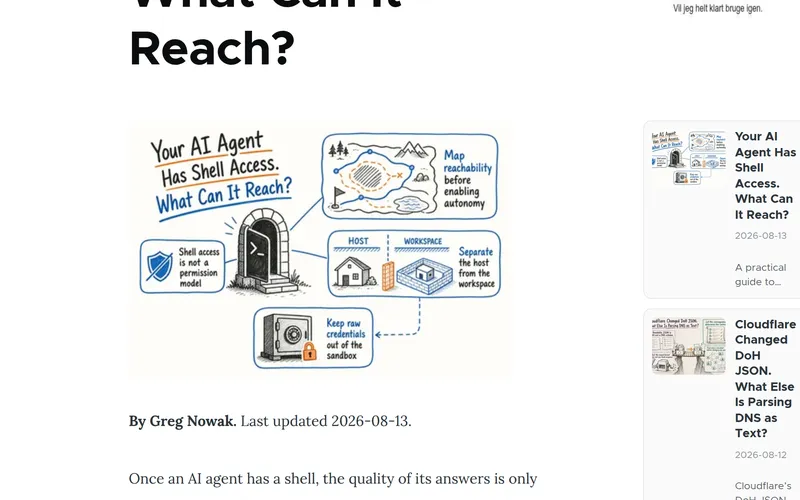
The articles on this site are written by a pipeline: every morning it scouts what changed in the web-development and AI world, picks one topic worth a practitioner's attention, writes the piece, draws a sketch-style infographic for it, and publishes — 138 articles since mid-April 2026, one per day, without a stock photo or an image-API key anywhere in the chain. A second, deliberately slower instance runs on nowa.dk: one guarded article a week, with a kill switch.

GrN.dk (this site) and nowa.dk