WebGL

3D on the web / Blender pipeline

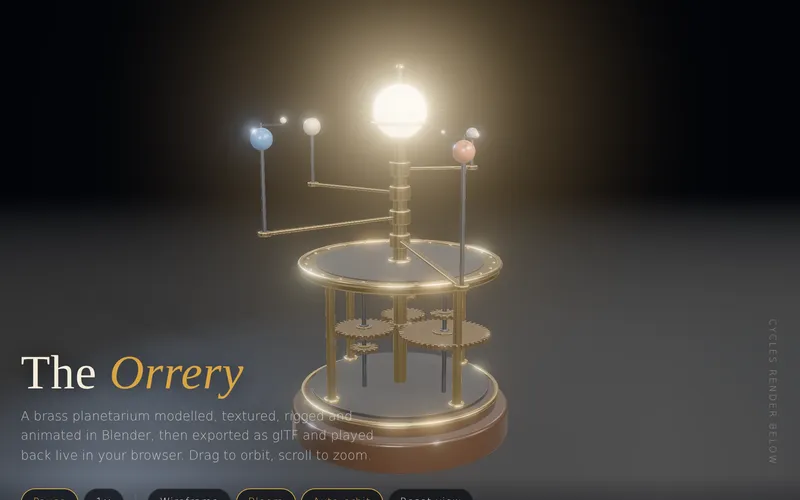
A brass orrery built by one Python script in Blender, turning live in the browser

The Orrery is a brass planetarium modelled, textured, rigged and animated in Blender 4.5, exported as glTF and played back live with three.js: a meshing gear train under the deck, four planets and their moons on whole-number orbits, a glowing sun with bloom, wireframe and speed controls, drag to orbit. Below it the same scene rendered as a seamless Cycles turntable loop — and the .blend, the .glb and the one Python script that builds all of it from an empty scene.

GrN.dk — demo shelf (demo.grn.dk)
3D on the web / product configurators

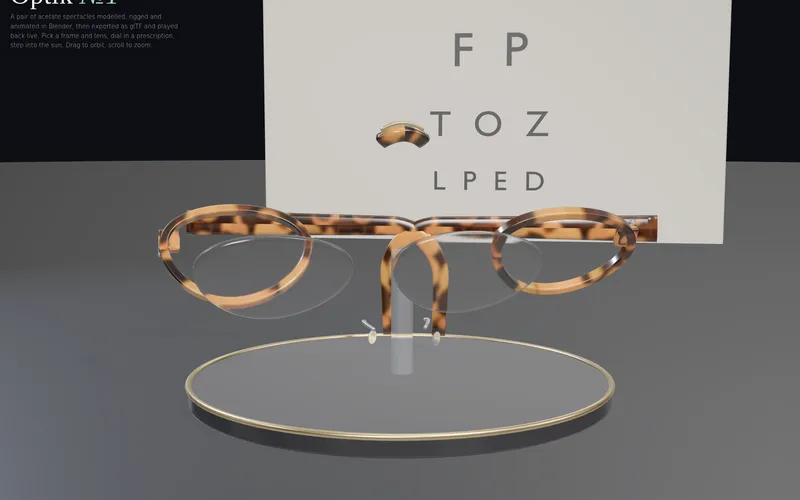
Spectacles modelled in Blender, configurable in the browser — down to the prescription in the lens

Optik №1 is a pair of acetate spectacles built end-to-end in Blender 4.5 — modelled, textured, rigged and animated — then exported as glTF and played back live with three.js. In the browser you pick a frame finish and a lens, dial in a prescription on lenses with real refraction, and step into sunlight to watch photochromic glass darken. A Cycles-rendered film and the source files ship alongside the live scene.

GrN.dk — demo shelf (demo.grn.dk)
3D on the web / product presentation

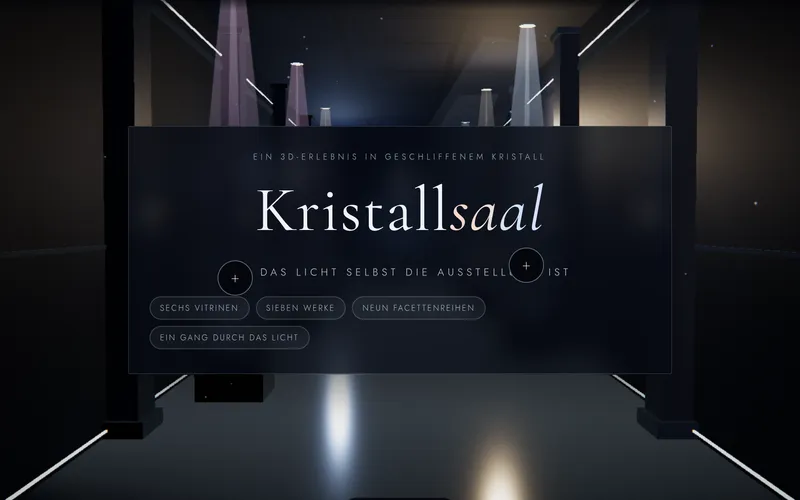
A crystal hall rendered live in the browser — then profiled until it ran everywhere

Kristallsaal is a walk-through jewellery hall that runs entirely in the browser: six vitrines of cut-crystal pieces under museum lighting, a mirror-polished floor, and light that actually splits into colour inside the stones. There is no engine download and no build pipeline — one HTML file, one JavaScript module and Three.js, served as static files. It exists to answer a client question with a demo instead of a slide: what does "3D product presentation on the web" feel like at the high end?

GrN.dk — demo shelf (demo.grn.dk)